Lutracad scales custom insole production with the Raise3D RMS220 SLS solution

Mar 24, 2026

About Lutracad

Lutracad focuses on software solutions for the orthotics and prosthetics market. The company develops specialized software for the design and production of custom insoles, shoe lasts, midsoles, and related orthopedic products.

Since 2016, Lutracad has been actively exploring 3D printing technologies to complement their clients’ digital workflows. Over the years, the team evaluated FDM, SLA, SLS, and other additive manufacturing techniques, with an initial focus on FDM due to its accessibility and ease of implementation.

However, as customer expectations evolved, particularly in the production of hard shell insoles, Lutracad began exploring SLS more seriously. Many of their customers were already using SLS technologies, but Lutracad had not yet found the right industrial solution that met their requirements.

That changed with the introduction of the Raise3D RMS220.

Solution

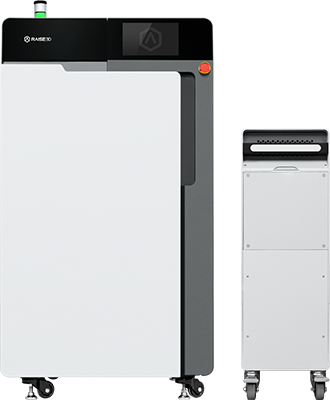
3D Printer: Raise3D RMS220 SLS 3D printer

Material: PA11

Software: ideaMaker

From FDM and milling to industrial SLS

Lutracad provides end to end workflow optimization for customers focused on the production of custom insoles tailored to individual patient needs. As demand increased, the company needed a solution that could better meet customer needs, delivering higher quality, improved productivity, and lower labor intensity.

Initially, Lutracad worked with FDM technology. While suitable for early development, FDM quickly revealed limitations in surface finish, achievable thickness, and production efficiency.

At the same time, traditional milling methods presented their own challenges. Milling required constant operator supervision, generated significant material waste, and involved multiple post processing steps before a product was ready for delivery.

The search for a better solution led Lutracad to Selective Laser Sintering (SLS) and ultimately to the Raise3D RMS220.

Why SLS for custom insoles?

After testing different technologies, Lutracad identified three decisive advantages of SLS:

  1. Superior product quality

Compared to FDM, SLS delivers a significantly improved surface finish and enables thinner insole designs without compromising performance. This is particularly important in orthopedic applications, where both comfort and structural integrity are critical.

The combination of SLS technology and high performance materials allows Lutracad to produce insoles that are thinner, lighter, and mechanically reliable.

  1. Higher productivity

With the RMS220, Lutracad can produce 20 to 25 pairs of insoles in a single build. Jobs run overnight, and by the next morning, a full batch is ready.

This is a major improvement compared to:

  • FDM, where operators needed to monitor the printer every few hours
  • Milling, where intervention was required approximately every 20 minutes

The ability to run unattended builds drastically increases daily output while reducing manual involvement.

  1. Efficient use of material

In milling, up to 80 to 90 percent of the material block becomes waste.

With SLS, every part is built layer by layer from powder, and unused powder can be reused in future builds. This significantly reduces material waste and improves sustainability.

Why Raise3D RMS220?

Lutracad had already been using Raise3D FDM systems for several years. This long term experience built strong confidence in both the machines and the company.

When Raise3D introduced the RMS220 SLS solution, Lutracad saw an opportunity to upgrade production while maintaining a trusted partnership.

Key factors behind the decision:

  • Trust in the Raise3D team and product reliability
  • Industrial build volume aligned with their production needs
  • Competitive print speed
  • A complete and integrated solution

For Lutracad, the RMS220 represented not just a machine, but a scalable production platform backed by a company they already knew and trusted.

Hook Image - RMS220

RMS220

Rapid Manufacturing Simplified

Replacing milling: Operational and cost advantages

Switching from milling to SLS delivered measurable improvements.

Reduced labor requirements

Milling requires a skilled operator to:

  • Monitor the machine frequently
  • Remove excess material
  • Perform extensive post processing
  • Finish and prepare the insole

With the RMS220, parts come out of the printer nearly finished. After depowdering, they only need to be covered before delivery.

This simplified workflow reduces the need for highly specialized labor and significantly lowers operational costs.

Instead of constant intervention, the RMS220 enables:

  • Batch production overnight
  • Minimal post processing
  • Predictable daily output

The result is a more efficient and scalable production process.

Why PA11?

Among the materials compatible with the RMS220, Lutracad selected PA11, which has become the market standard for insole applications.

The reasons include:

  • Excellent balance between flexibility and rigidity
  • Adjustable performance through thickness variation
  • High elongation at break
  • Reliable mechanical behavior for orthopedic use

By modifying regional insole thickness, Lutracad can fine tune flexibility to match individual patient requirements, offering true customization at scale.

Software integration with ideaMaker

Lutracad uses ideaMaker for both FDM and SLS production, ensuring continuity in workflow.

Key benefits include:

  • Easy part packing for optimal build density
  • Simple and intuitive interface
  • Full control over print parameters
  • Seamless transition from FDM to SLS

The ability to manage both technologies within the same software ecosystem simplifies training and daily operations.

Early user experience

As part of the early user program, Lutracad operated the RMS220 for several weeks before full implementation.

The feedback has been highly positive:

  • Easy to use
  • Reliable daily operation
  • Consistent print quality
  • Comfortable to provide SLS products to their own customers

According to Lutracad, the system meets current market standards for surface quality and mechanical performance, enabling them to confidently expand their SLS offering.


Looking ahead: Scaling with SLS

Lutracad sees SLS as a long term platform for growth. Future expectations include:

  • Access to additional materials for new applications
  • Further automation in powder mixing
  • Smart printer functions that fine tune parameters automatically
  • Expanded market opportunities through advanced additive manufacturing

With the RMS220 as a foundation, Lutracad plans to scale production and explore new orthopedic and performance applications.

Conclusion

By implementing the Raise3D RMS220 SLS solution, Lutracad transformed its custom insole production.

The company achieved:

  • Superior surface quality and thinner designs
  • Batch production of up to 25 pairs per build
  • Significant reduction in labor dependency
  • Dramatic material waste reduction compared to milling
  • A scalable and future ready manufacturing workflow

For Lutracad, the RMS220 delivers exactly what they were looking for: printing quality, productivity, and material performance combined in one complete package.

Connect with Raise3D

Do you have a great 3D printing success story and think it would be cool to be featured on our website? We would love to learn more! Write to us at inquiry@raise3d.com

For more information about Raise3D printers and services, browse our website, or schedule a demo with one of our 3D printing experts.

3D Printing Applications